Facelessreels

Video ideas

Faceless reels examples you can make your own

These faceless reels examples turn everyday knowledge, stories, and objects into short videos without putting a person on camera. Pick a format, then give it one clear point.

You can revise the idea before sharing
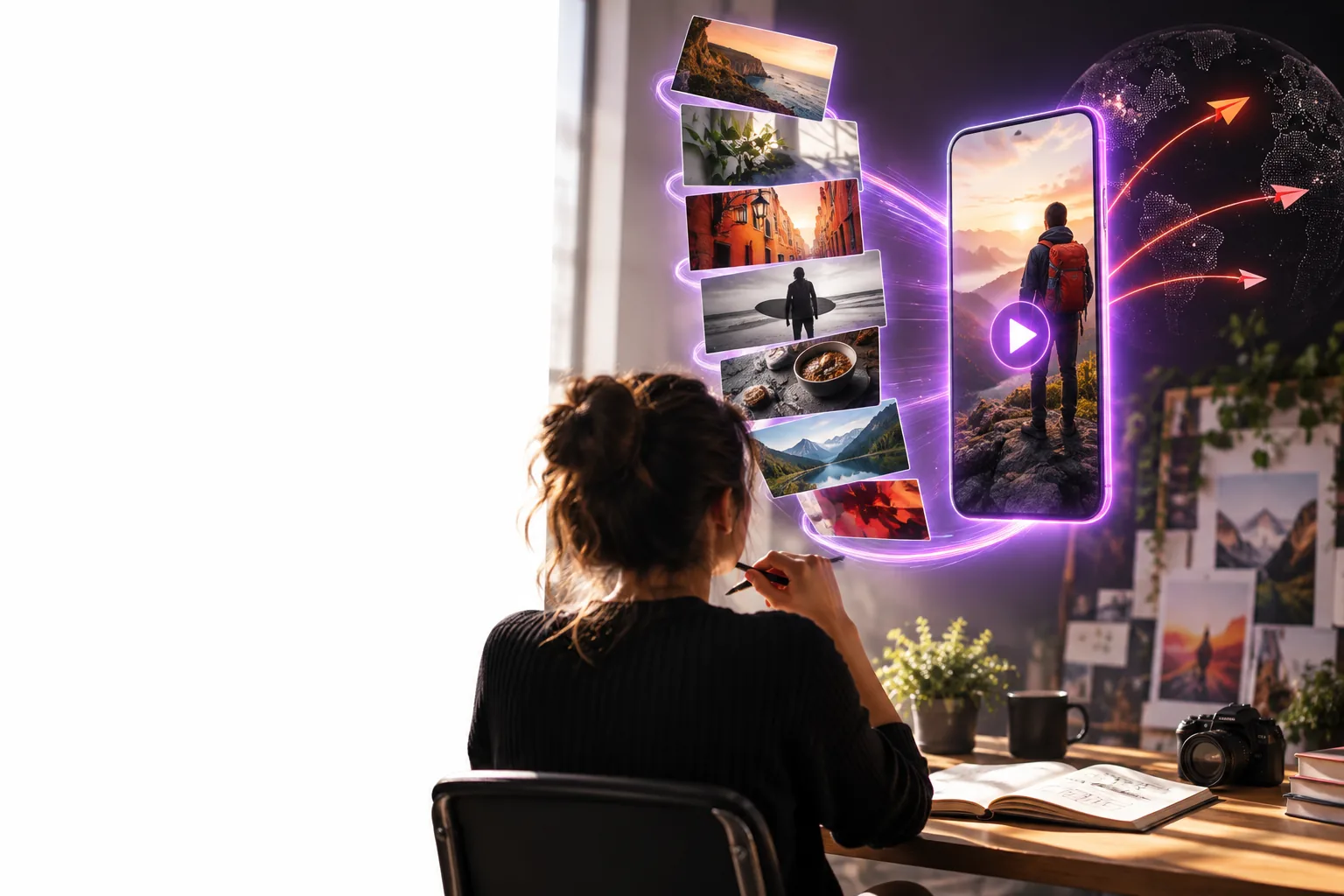
Illustrated short-video imagery for a faceless reel

An example helps most when you know whether you need a format, a creation tool, or a way to test an idea.

Three choices an example cannot make for you

A sample can suggest a structure, but it cannot supply your research, permission to use media, or a reason for viewers to stay.

  • It cannot verify a claim

    A polished history or health reel may still contain a wrong date, misleading statistic, or unsupported explanation.

    WorkaroundCheck factual lines against reliable sources before recording narration or publishing captions.

  • It cannot clear media rights

    An example may inspire a visual approach, but its music, footage, and artwork are not automatically available for reuse.

    WorkaroundUse your own material or assets whose permissions cover your intended use.

  • It cannot guarantee attention

    Copying a popular opening does not make a broad topic interesting to a particular audience.

    WorkaroundAsk one specific question up front and make every scene help answer it.

Build the reel step by step

Treat an example as a pattern to adapt rather than a script to copy.

  1. 1

    Choose one takeaway

    Write the single thing a viewer should remember. For a kitchen reel, that might be why resting dough changes its texture, not a complete guide to baking.

  2. 2

    Match visuals to the explanation

    List a few scenes that can carry the meaning without a presenter: a close-up, an annotated diagram, a product detail, or a sequence of illustrations.

  3. 3

    Write for sound-off viewing

    Put the key question and answer in readable captions. If you add narration, make sure it clarifies the visuals rather than repeating every word on screen.

  4. 4

    Review the finished sequence

    Watch once with sound and once without it. Cut any scene that delays the answer, then check claims, spelling, and asset permissions.

Choose an example that fits the subject

A narrated explainer and a text-led list both avoid an on-camera host, but they ask different things of the viewer.

1

Best fit

Narrated explainer

A process, cause, or short story

Text-led list

Tips, comparisons, or quick recommendations

2

Opening

Narrated explainer

A question the narration will answer

Text-led list

A concise promise visible on screen

3

Visuals

Narrated explainer

Scenes that illustrate each spoken point

Text-led list

Distinct images or clips for each item

4

Audio

Narrated explainer

Narration carries the explanation

Text-led list

The message remains clear without narration

5

Caption role

Narrated explainer

Reinforces key terms and the conclusion

Text-led list

Carries most of the information

6

Common weak spot

Narrated explainer

Generic visuals that do not explain the claim

Text-led list

Too much text to read before the next cut

Ideas for different kinds of creators

Use these scenarios as briefs. Change the topic, imagery, and wording until the reel reflects something you can genuinely explain or show.

Teacher

Show why a shadow changes length using a simple illustrated sun, a fixed object, and moving time labels.

The viewer gets one visual explanation rather than a lecture. For help turning the brief into scenes, explore the generator.

faceless reels generator


Local shop owner

Film a product being packed, then add short captions explaining what makes its material or construction distinctive.

The product stays central without a talking head. If you want help shaping the script, explore AI-assisted reels.

faceless reels ai

Hobby cook

Use overhead shots to show one technique, such as folding dough, with a caption explaining what to look for.

Hands and ingredients provide the action while the explanation stays brief. You can start by testing a free route.

faceless reels free

History storyteller

Build a short timeline around one documented event, using maps, dates, and clearly attributed imagery.

The sequence gives viewers a clear thread to follow. Browse more approaches if this storytelling format is not right for you.

faceless reels alternative

Move from visual inspiration to a specific brief

A striking scene can suggest a mood; a useful reel brief also states what viewers will learn and how each scene helps.

  • Visual inspiration
  • Reel direction

These are illustrative references, not a documented before-and-after edit. Start with the question your reel answers, then choose visuals that support it.

Illustrated short-video example used as visual inspiration
Illustrated scene representing a planned faceless reel

Turn one idea into a draft

Make the example your own

Choose a subject you know, give it one takeaway, and describe the scenes you want to show. Review the resulting draft for accuracy and rights before publishing.

Create a reel
  • Begin with a specific question
  • Keep the visuals tied to the answer
  • Check the final captions and sources

Questions about faceless content ideas

Try an overhead how-to, a captioned product detail, a narrated historical moment, or a short visual explanation of an everyday question. The strongest idea has one takeaway that viewers can understand without seeing a presenter.

You can use hands, objects, screen recordings, diagrams, maps, or original illustrations. Choose imagery that adds information, not just motion behind a caption.

Start with a question you can answer from your own knowledge or research. Give the reel a specific example, a distinct visual sequence, and wording that fits your audience rather than copying another creator's script.

No. A text-led reel can work if its captions are easy to read and the visuals carry the sequence. Narration is useful when a process or story needs more explanation than short captions can comfortably provide.

Start creating
Start creating